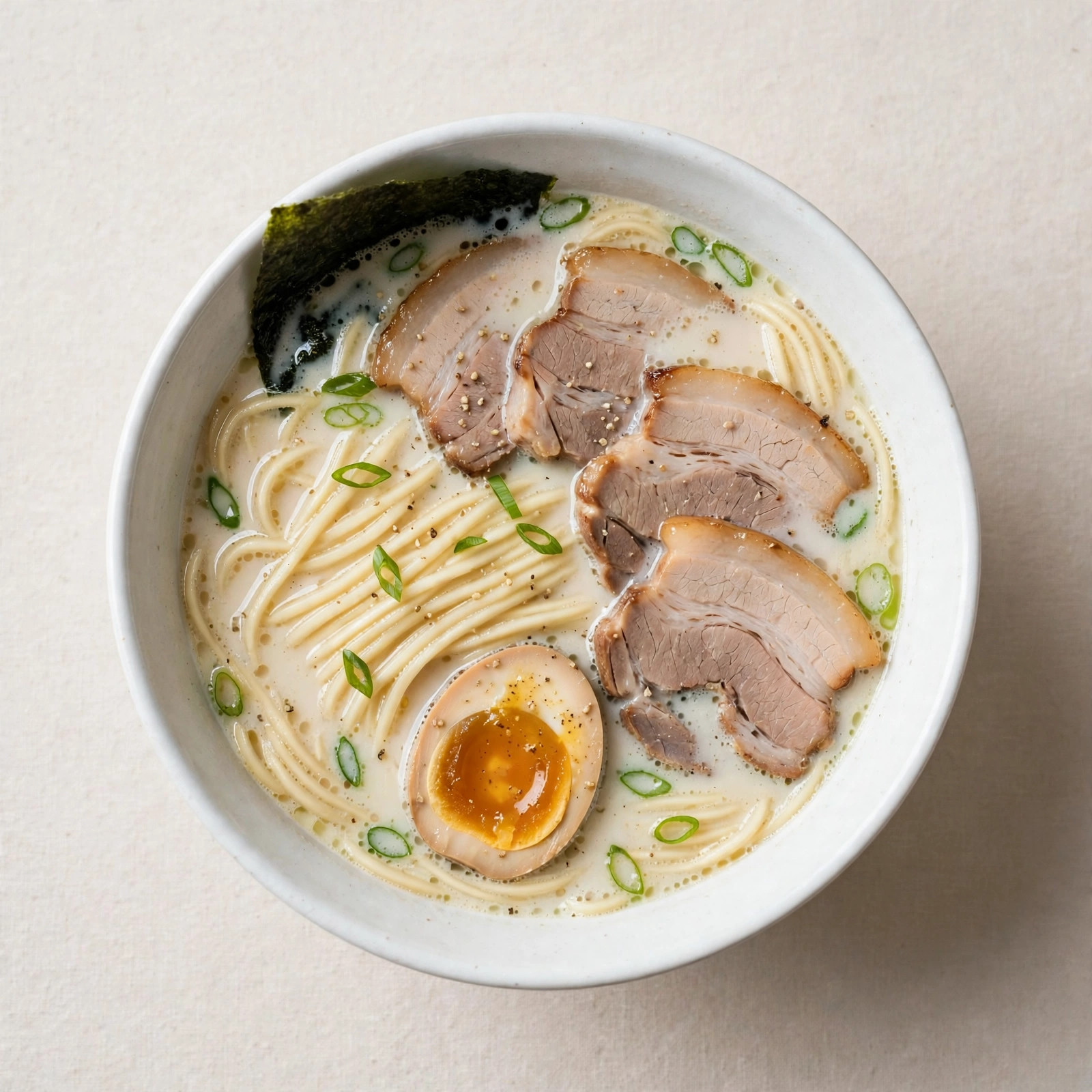
What is tonkotsu ramen?
A rich, creamy pork-bone broth — boiled 12 to 18 hours until it turns milky white — with thin, straight noodles. Born in Hakata (Fukuoka), now found everywhere in Japan.
How to customize like a regular
Many tonkotsu shops hand you an order slip for noodle firmness and toppings:
- 麺の硬さ (noodle firmness): barikata (バリカタ very firm) → katame (硬め firm) → futsuu (普通 normal) → yawarakame (柔らかめ soft). First-timers: go katame.
- 替え玉 kaedama — a second helping of noodles (¥100–150) dropped into your leftover broth. Order by saying "kaedama onegai shimasu".
- Toppings: negi (ネギ green onion), nori (海苔 seaweed), ajitama (味玉 seasoned egg), extra chashu pork.
What to expect
The broth is rich but not heavy-spiced — porky, savory, with a clean finish when done well. Pickled ginger (紅生姜 benishouga) and sesame seeds on the table are for you to add. Garlic crushers are common too.
Common questions
Is tonkotsu ramen spicy?
No — the classic version isn't spicy at all. Some shops offer a spicy miso or chili-oil variant, but it will be clearly labeled (辛 kara = spicy).
What's the difference from shoyu/miso ramen?
Tonkotsu refers to the pork-bone broth base. Shoyu (soy sauce), miso, and shio (salt) refer to the seasoning. A "tonkotsu shoyu" is pork broth seasoned with soy sauce — the categories overlap.