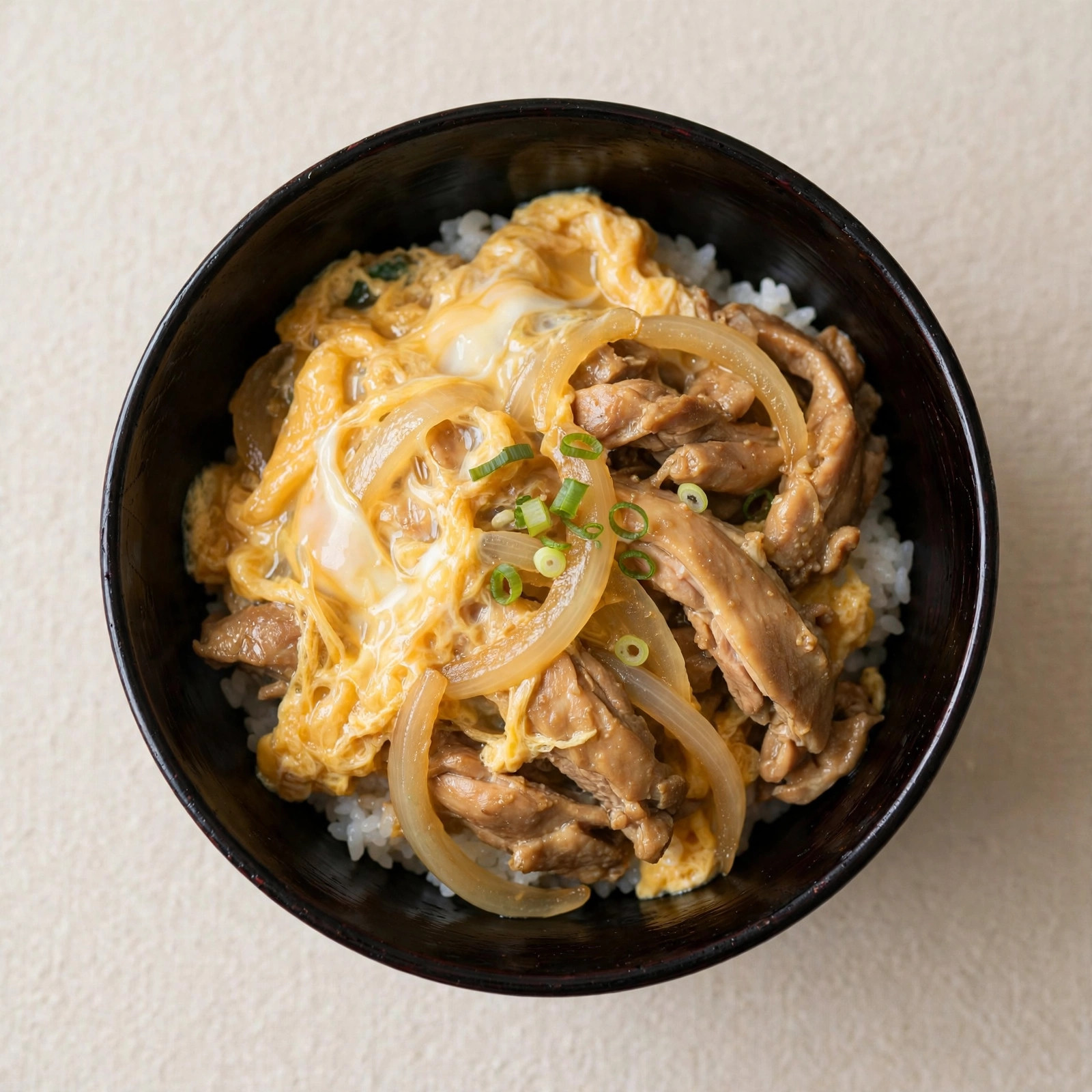
What is oyakodon?
A comforting rice bowl of chicken and egg simmered in sweet soy-dashi. The name literally means "parent and child bowl" — chicken (the parent) and egg (the child) cooked together. Yes, that's why your translator app said something weird.
What does it taste like?
Think of a savory-sweet egg drop over rice, with tender bites of chicken and soft onion. The sauce — soy sauce, mirin, and dashi stock — soaks into the rice. It's mild, warming, and one of the safest orders in Japan if you're unsure: no raw fish, nothing spicy, nothing unfamiliar in texture.
How to eat it
- Often comes with a small side of miso soup and pickles.
- Sprinkle shichimi (seven-spice) on top if you want a little heat.
- Eat it with chopsticks straight from the bowl, lifting the bowl closer to your mouth — totally normal in Japan.
Where to find it
Everywhere: soba/udon shops, casual teishoku (set meal) restaurants, department store food basements, and chains like Nakau and Yoshinoya. If a menu just says 親子丼 with no photo, now you know.
Common questions
Is the egg raw?
No. The beaten egg is poured over the simmering chicken and sets softly from the heat — like a soft scramble, not raw egg.
Does it contain fish?
The sauce uses dashi, which is usually made from bonito (fish) flakes. Strict vegetarians should ask — say "dashi wa haitte imasu ka?"
Why did my translator say "parent and child bowl"?
Because it translated the kanji literally: 親 (parent) + 子 (child) + 丼 (bowl).