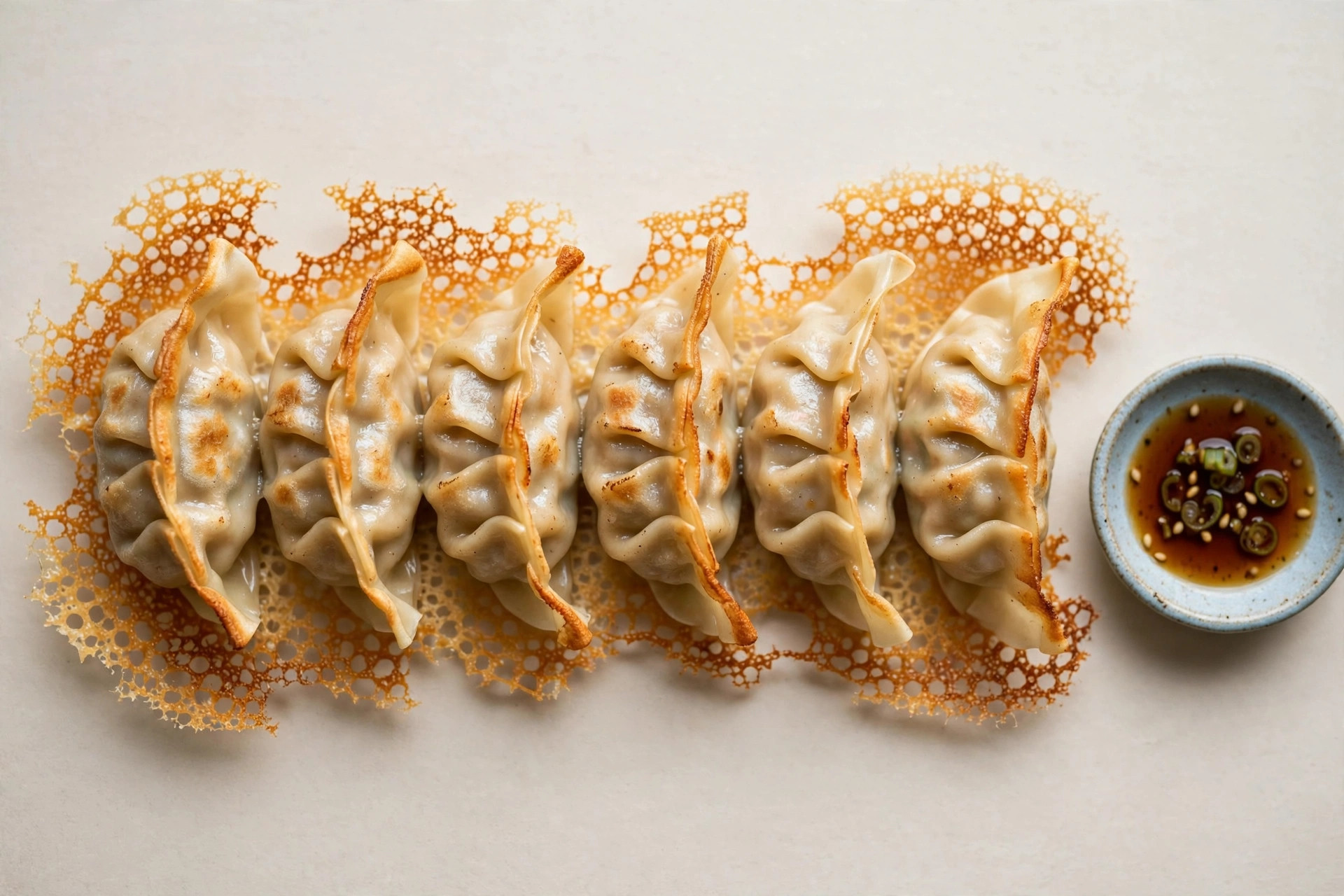
餃子
Gyoza · gyoh-zah
What is gyoza?
Pan-fried dumplings with a pork-and-cabbage filling — crispy golden bottom, steamed-soft top. In Japan they're usually a side dish (with ramen, with beer), not the main event.
What's inside
🐖 Pork + cabbage
Raw / cooked
🔥 Cooked
Spicy?
No (add chili oil)
Typical price
¥300–500 (5–6 pc)
How they differ from Chinese jiaozi
- Thinner skin, smaller size — Japanese gyoza are delicate; jiaozi are heartier.
- Pan-fried is the default (焼き餃子 yaki-gyoza). Boiled (水餃子 sui-gyoza) exists but is less common.
- Garlic-forward filling — Japanese gyoza use more garlic and ginger than most Chinese versions.
The dipping sauce (you make it)
Nothing comes pre-mixed. Combine at the table: soy sauce + vinegar + chili oil (la-yu). The Japanese ratio leans heavy on vinegar — try 2 parts vinegar, 1 part soy, a drop of chili oil.
Styles worth seeking
- 浜松 Hamamatsu style — served with bean sprouts and a crispy lacy "skirt" (羽根 hane) connecting the dumplings.
- 宇都宮 Utsunomiya style — from Japan's self-declared gyoza capital; dozens of specialty shops.
- ひとくち Hitokuchi — tiny one-bite gyoza, a bar-snack style.
Common questions
Is there a vegetarian gyoza?
Some shops offer vegetable gyoza (野菜餃子 yasai gyoza), but the default is always pork — ask before assuming.
Can gyoza be a full meal?
At specialty shops, yes — order two plates plus rice. At ramen shops, it's a side.